Dry Land
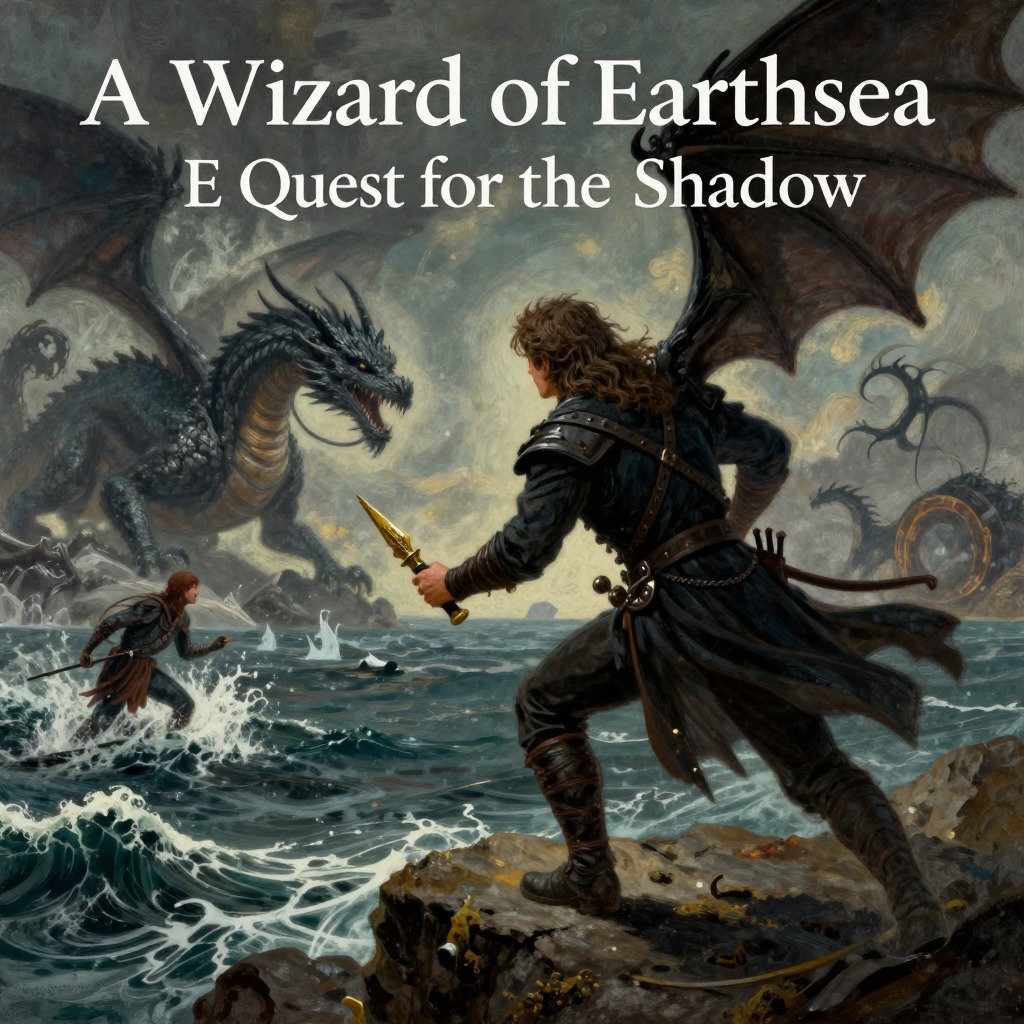
The Dry Land is the realm of the dead in Earthsea, a silent, star-lit, and utterly dry place where the spirits of the dead go after death, and which only the most powerful wizards can visit and return from at great risk. It is the ultimate boundary of life, the place where the shadow Ged loosed awaited him, and where his final confrontation and integration with that shadow took place, marking the completion of his quest for wholeness.
Geography and Nature
The Dry Land is a vast, silent, and arid region, a kingdom of darkness where no wind blows and the stars are fixed and unfamiliar. When Ged pursued the dying child Ioeth, he saw the stars of the Dry Land: the Sheaf, the Door, the One Who Turns, the Tree—constellations that do not set and are never paled by any day. The ground is dry and steep, and the only sound is the whisper of sand underfoot. It is a place without water, without life, a "dark land" where the sea itself turns to sand. When Ged and Vetch sailed to the edge of the world, the sea became sand, and the boat grounded on a shore of shadowy, unstirred sand under a dark sky. This is the place where the dead must go, a realm of utter silence and stillness, a "dry place" in contrast to the living, watery world.
Access and the Boundary Wall
The Dry Land is separated from the world of the living by a low wall of stones. Only a wizard can make the crossing-over and return with open eyes, and even the greatest mage cannot do so without risk. Ged first crossed this boundary when he followed the spirit of the dying child Ioeth, calling his name. He found himself on a dark hillside, and when he turned back, he saw the low wall of stones. Across the wall, facing him, stood the shadow he had loosed, waiting for him on the side of the living while he stood on the side of the dead. To return, he had to leap the wall, and his staff blazed with white fire as he did so. This crossing was a near-fatal ordeal, and he was only brought back by the instinctive touch of his otak. Later, at the climax of his quest, Ged and Vetch sailed into a region where the sea turned to sand, and Ged walked from the boat into the Dry Land to meet his shadow for the final time.
The Shadow's Lair and the Final Confrontation
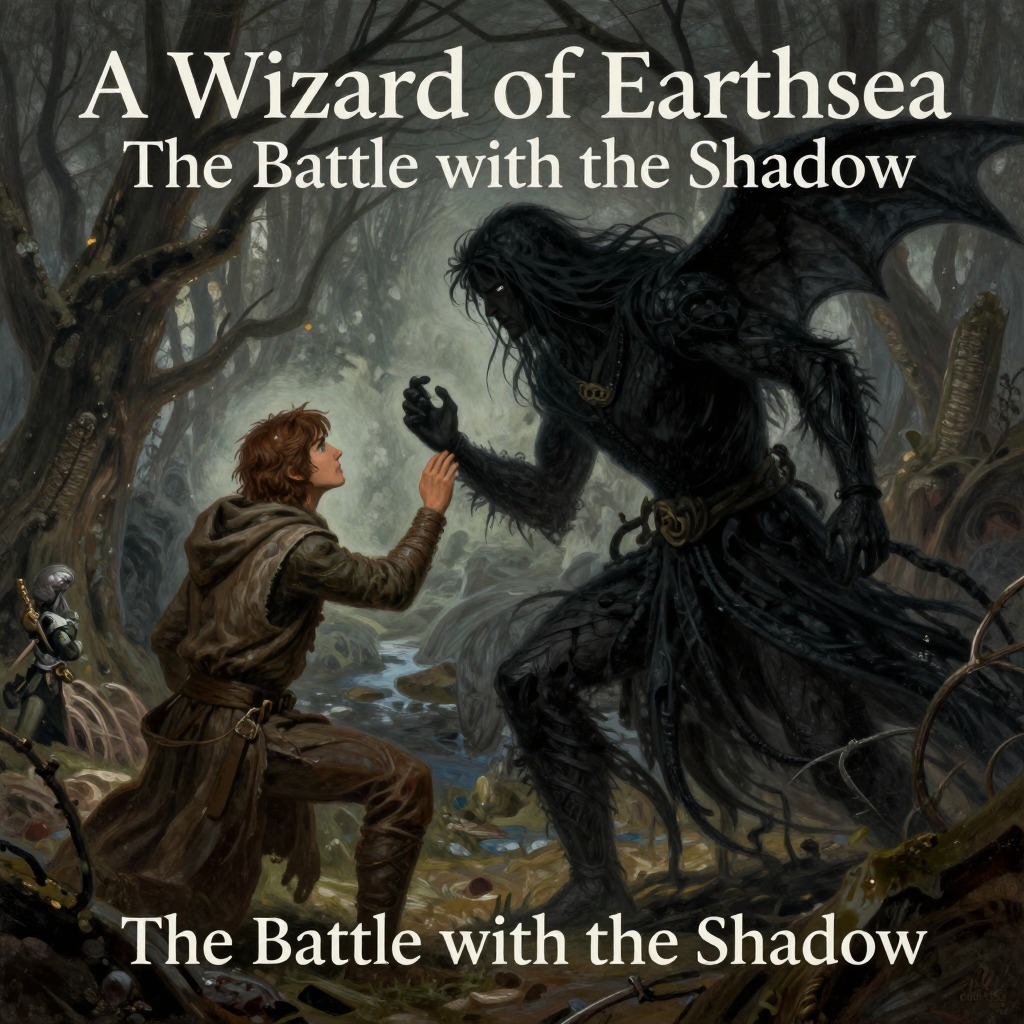
The Dry Land was the place where the shadow, the creature of unlife that Ged had loosed, awaited him. It was there, at the boundary wall, that the shadow first confronted him after his attempt to save Ioeth. The shadow stood on the side of the living, and Ged on the side of the dead, and he had to choose between descending into the desert lands of the dead or leaping back into life where the shadow waited. In the final confrontation, Ged walked across the dark sand of the Dry Land, his staff burning with a clear white glow. The shadow approached, taking on the forms of his father, Jasper, Pechvarry, and Skiorh, before becoming a blind, unformed snout. There, in the silence of the Dry Land, Ged spoke the shadow's name, and the shadow spoke his name, and they became one. The light and darkness met and joined, and Ged was made whole.
Significance and Thematic Meaning
The Dry Land is not merely a location but a central symbol in Ged's journey. It represents the ultimate consequence of his pride and folly, the place where his shadow—the embodiment of his arrogance, ignorance, and fear—dwells. Ogion's advice to Ged, to "turn around" and "seek what seeks you," was a call to enter this realm of death and face his own darkness. The Dry Land is the place where the old, fragmented self must die for the new, integrated self to be born. Ged's journey there is a literal enactment of the principle that "only in dying life"—a truth sung in the oldest song, The Creation of Éa. By entering the Dry Land and naming his shadow, Ged did not defeat an external enemy but integrated a part of himself, achieving a wholeness that allowed him to live for life's sake, no longer in the service of ruin or the dark. The Dry Land, therefore, is the crucible of his transformation, the place where he becomes a true man and a true mage.